Cooper Clinic Registered Dietitian Nutritionists Share Dietitian Recommended Supplements

Ideally, everyone would consume a balanced, nutritious diet and obtain necessary nutrients primarily from the food on their plate. However, the current American health crisis proves most are not achieving this.
Cooper Clinic registered dietitian nutritionists are among the most credentialed and well-informed food professionals in the country. Even though they know the wise food choices to make better than the average consumer, we found vitamins and supplements still play an important role in their personal nutrition regimen.
We sat down with Elana Paddock, RDN, LD, CDE, and Cynthanne Duryea, RDN, LD, and asked them to talk about dietitian-recommended supplements.
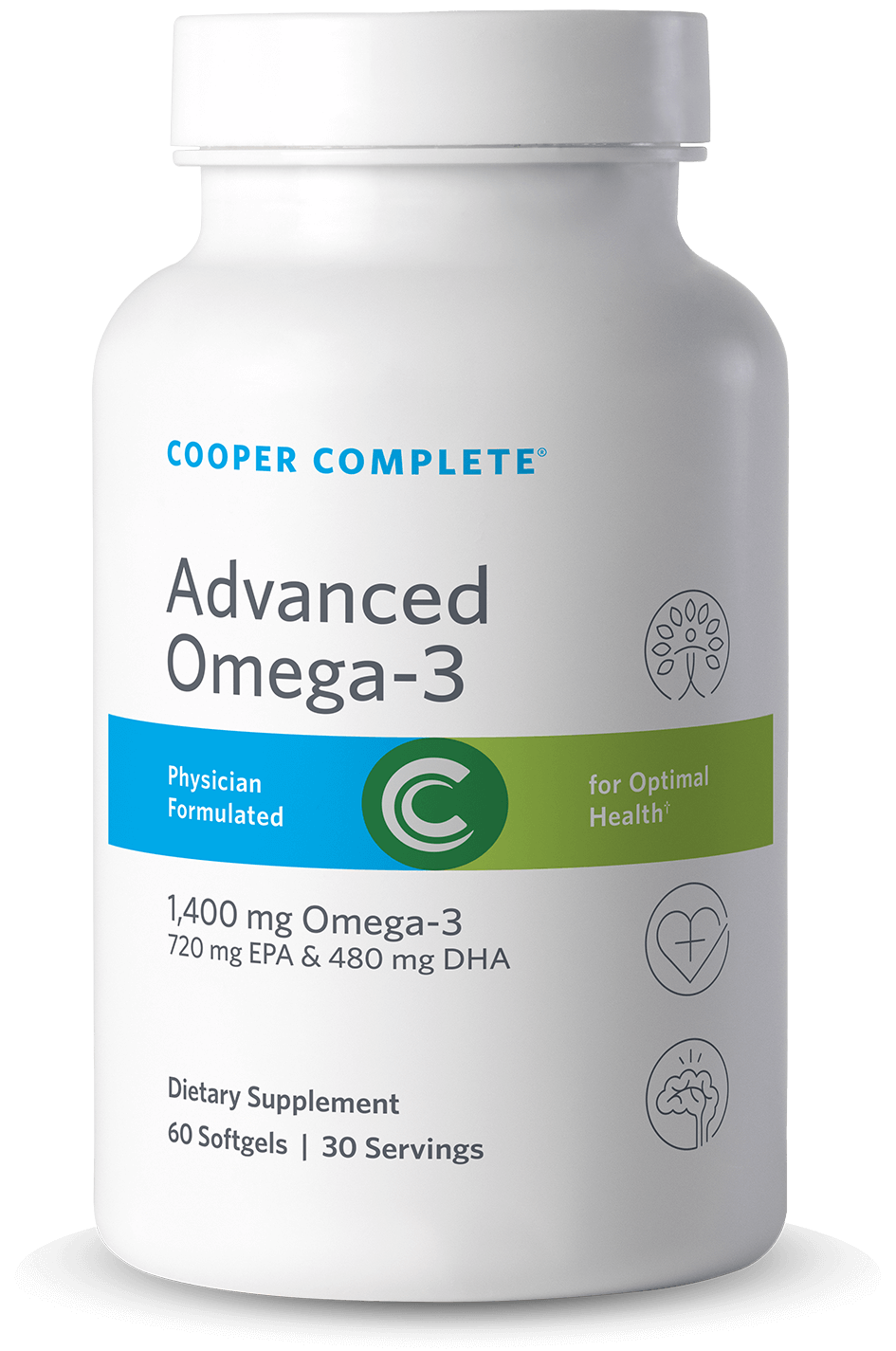
Advanced Omega-3 Supplement
Advanced Omega 3 Supplement contains 720 mg EPA, 480 mg DHA, and 200 mg other omega-3 fatty acids in each serving of two lemon-flavored softgels. Omega 3 supplementation supports heart health, cognition, immune, and inflammatory health without any fishy aftertaste.†
$22.98 Add to cartWhich vitamins and supplements do you take and why?
 Elana: Though I eat an overall healthy diet, I take a daily multivitamin. Cooper Complete Basic One With Iron contains 50 mcg (2000 IU) of vitamin D3. I take an additional 25 mcg (1000 IU) of Cooper Complete Vitamin D3 to maintain an optimal vitamin D level for bone health and absorption of calcium since I have been told I have low bone density.
I also take 1200 EPA and DHA omega-3 fatty acids in Cooper Complete Advanced Omega-3 to compensate for my fish intake, which varies from week to week.
 Cynthanne: Although I have a “food first” philosophy and am intentional with my food choices, I take the Basic One Iron Free multivitamin. I especially like it because it contains 50mcg (2000 IU) of vitamin D3, so it serves as my sole vitamin D supplement in one tablet/day form.
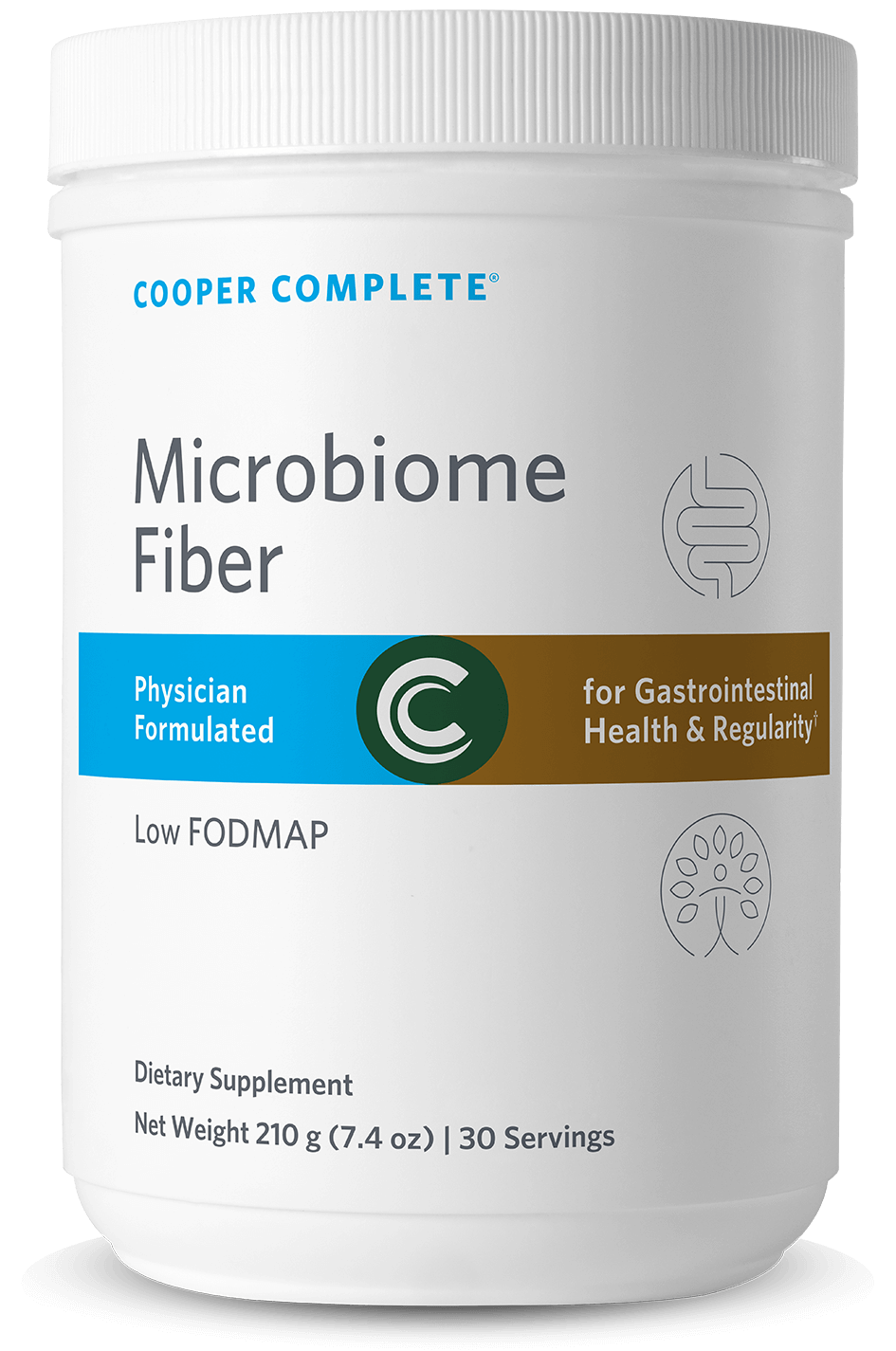
Microbiome Fiber Supplement
Cooper Complete® Daily Prebiotic Microbiome Fiber supplement contains 6 grams of tasteless and gritless soluble fiber and is low FODMAP to support gastrointestinal health and regularity.†
$30.48 Add to cartWhich vitamins and supplements do you give your family?
Cynthanne: My husband takes the Basic One Iron Free multivitamin. Also, he takes the CoQ10 100 mg supplement because he takes a statin and has been able to avoid side effects while taking CoQ10. He takes Advanced Omega-3 as his fish intake is inconsistent.
Which vitamins and supplements do you recommend for your patients and why?
Elana: My recommended supplements are specific to the patient’s needs. Generally, our patients have a low baseline blood level of vitamin D, and since food is not a good enough source of vitamin D, they need a supplement to correct this deficiency. The supplemental amount can be 25 mcg (1000 IU), 50 mcg (2000 IU) or greater depending on their vitamin D blood level.
During a patient’s nutrition consultation we can generally assess how healthy their diet is using a three-day Food Record or a 24-hour diet recall. For those who eat a well-balanced diet, a multivitamin may not be necessary. Most vitamins and minerals can be adequately obtained through food, and that is the message I try to stress as their dietitian. Food first! However, if there are obvious food/nutrient deficiencies (for example, if they don’t eat enough fruits and vegetables), I may recommend a multivitamin to compensate.
If a patient has low bone density and/or if his or her diet lacks the necessary calcium-rich foods, I may recommend a calcium citrate supplement in the amount specific to their needs based on gender, age, and bone density reports.
If a patient has high LDL cholesterol, I may recommend a daily soluble fiber like Cooper Complete Microbiome Fiber that can help reduce LDL. Cooper Clinic Cardiologist Nina Radford, MD, recommends berberine supplements to lower LDL cholesterol.
Cynthanne: Several factors are considered regarding whether I recommend a nutritional supplement for a patient, as my guidance is individualized according to their unique circumstances. It is common to see vitamin D deficiency as determined by blood testing. Because there are few natural sources of vitamin D in foods, and since sun exposure (which can allow your body to make its own vitamin D) should be limited to prevent skin cancer and premature aging of the skin, Cooper Complete Vitamin D3 supplements may be the most prevailing supplement I recommend. Calcium intake is frequently below goal for many patients I see. Since women tend to be at higher risk for decreased bone density, calcium citrate is a frequent supplement recommendation for female patients.
Bonus: The Cooper Clinic Nutrition Services team posed four questions to ask yourself to help determine if you’re getting enough nutrients through your diet alone and if not, what supplements might be best for you.
Article provided by Cooper Complete team.