Glucosamine for Joint Health – Which Form to Use

Summary – Quick Takeaway: Glucosamine sulfate supplement is one of the most researched supplements for joint health†. Studies suggest a daily dose of 1,500 mg may help support joint comfort, mobility, and cartilage integrity†, especially for individuals with osteoarthritis†. Learn how it works, the optimal dosage, and whether it’s right for you.
Table of Contents
Click to navigate
According to the Arthritis Foundation, osteoarthritis, the most common form of arthritis, affects millions of Americans. In this chronic joint condition, cartilage deteriorates. In healthy joints, cartilage covers the end of each bone, cushioning the bone and providing a smooth surface for joint motion. With osteoarthritis, the cartilage breaks down over time, causing a range of unfavorable symptoms such as:
- Joint pain – especially after repetitive movements, which often worsens later in the day
- Stiffness – especially first thing in the morning or after periods of inactivity
- Creaking or grating sensations
- Tenderness and swelling
- Bone spurs
Lifestyle changes such as maintaining a healthy weight, increased physical activity, and incorporating stretching may make a significant difference in supporting joint function. Nutritional supplements may also help support joint comfort and mobility†.
What Is Glucosamine Sulfate?
Glucosamine sulfate, found in some joint health supplements, is a compound naturally produced in the body that helps support the structure and function of cartilage, the smooth, rubbery tissue that cushions joints†. In supplement form, glucosamine is often used in products marketed for joint comfort, mobility, and overall joint health support†.
Glucosamine sulfate is one of the most studied forms of glucosamine. The “sulfate” portion is a stabilizing salt that may also play a role in supporting cartilage production†. Because glucosamine sulfate is not found in significant amounts in food, supplementation is the primary way to obtain it.
Why Choose Glucosamine for Joint Health?
Glucosamine helps support the body’s natural ability to maintain healthy cartilage†. Unlike other nutrients, it is not obtained directly from food, but is instead naturally produced within the body. Due to extensive research regarding joint health, glucosamine is one of the most popular supplements on the market†.
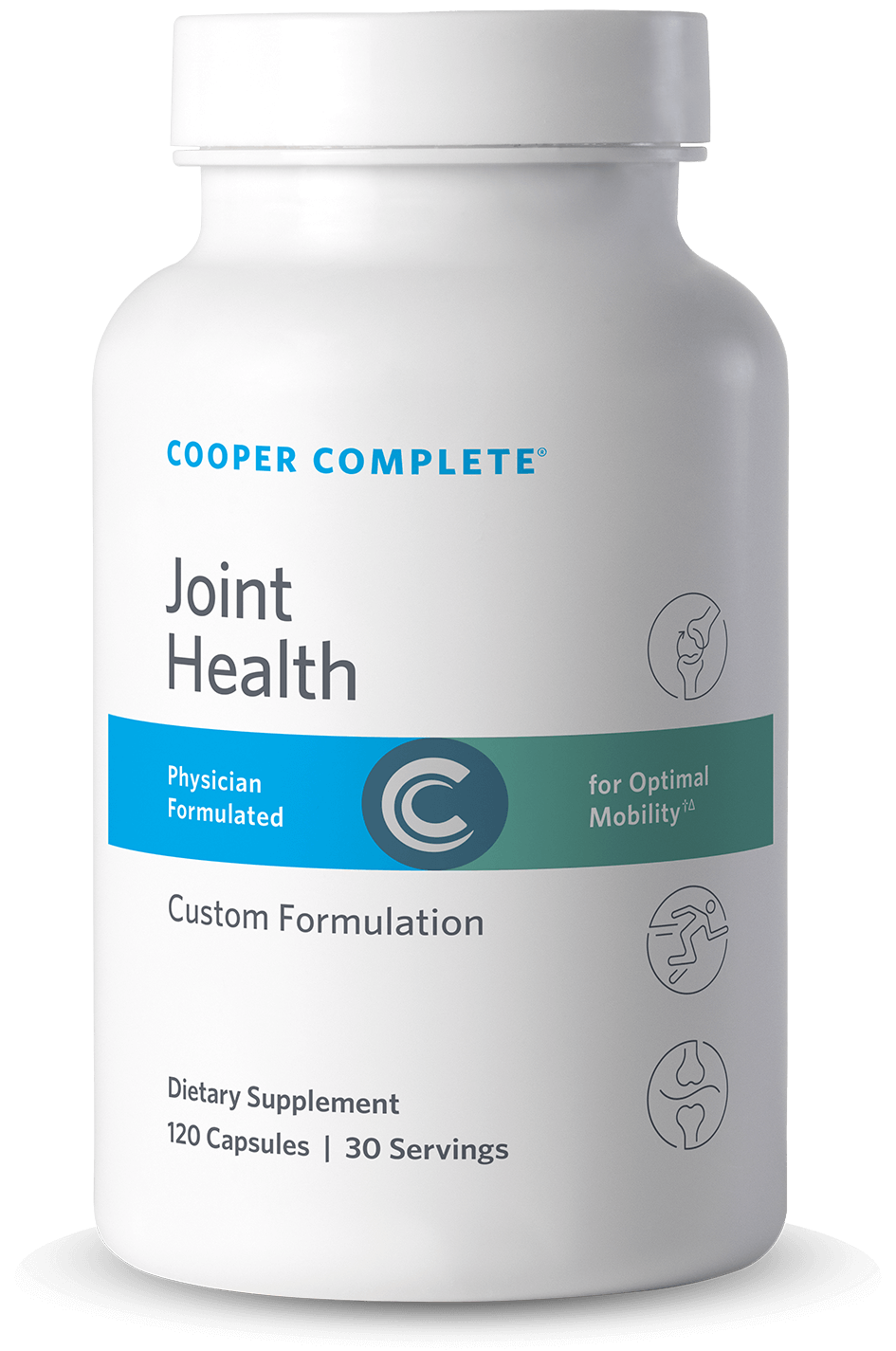
As in the case of Cooper Complete Joint Health, glucosamine is often combined with chondroitin, as the two are believed to work synergistically†. Glucosamine has been shown in research to support joint comfort and joint function†. While ongoing studies continue to explore its benefits, researchers have proposed several possible ways glucosamine for cartilage support† may help support joint health†, including:
Joint Health Supplement
Custom Formulated Nutritional Supplement with Glucosamine Sulfate (2KCI), Chondroitin Sulfate, and Bromelain.
$39.98 Add to cart- Supporting cartilage integrity†
- Aiding in joint lubrication†
- Helping cartilage retain water†
Why Choose Glucosamine Sulfate?
Forms of Glucosamine and Which Is Best
There are three common forms of glucosamine:
- Glucosamine sulfate
- Glucosamine hydrochloride
- N-acetyl glucosamine
While studies vary in their conclusions, most of the research supporting glucosamine sulfate benefits† has focused on glucosamine sulfate†. One study showed evidence that the hydrochloride and sulfate forms are equally effective; however, the vast majority of research has been done on glucosamine sulfate. Some researchers believe the sulfate component may be important, as sulfate is needed by the body to produce cartilage.
How Glucosamine Sulfate Appears on Labels (Including 2KCl)
Glucosamine sulfate is not always listed on supplement labels the same way. Common variations include:
- Glucosamine sulfate potassium chloride, also written as glucosamine sulfate 2KCl. The “2KCl” indicates the presence of two potassium chloride molecules that help stabilize the glucosamine sulfate.
- Glucosamine sulfate sodium chloride is stabilized with sodium chloride instead of potassium chloride.
- Pure glucosamine sulfate contains no additional stabilizing salt.
These variations all provide glucosamine sulfate as the active ingredient. Potassium chloride or sodium chloride is simply a stabilizing compound and does not change the way the glucosamine itself works†.
Glucosamine sulfate has been shown to significantly decrease pain scores (by about 28 to 41 percent) and improve functionality by 21 to 46 percent†. Multiple studies have shown that glucosamine sulfate is comparable to anti-inflammatory drugs such as ibuprofen†. While it may take longer to take effect than some over-the-counter medications, it may offer sustained benefits when taken consistently†.
Cooper Complete Joint Health utilizes glucosamine sulfate for this reason. As scientific understanding evolves, the formulation may be updated based on the latest research.
How Much Glucosamine Sulfate Should You Take?
The most common glucosamine sulfate dosage studied for joint health is a total daily dose of 1,500 mg†. Many people wonder “How much glucosamine should I take for joint health?”, and research suggests this is the amount most often used in clinical studies†.
If you have already taken a competitor’s product containing 1,500 mg of glucosamine sulfate consistently for at least 60 days without noticing significant improvements, it is unlikely that glucosamine sulfate is going to provide you with noticeable benefits†. Two months is enough time to assess whether your body responds to the supplementation.
Always consult with your physician or health care provider before you start taking glucosamine sulfate, especially if you are taking prescription medications or have existing medical conditions.
Recommendations for Taking Cooper Complete Joint Health
- If you are trying Joint Health for the first time, allow at least two months of consistent daily use to evaluate its effects†.
- Approximately 70 percent of individuals using glucosamine chondroitin for joints† report improved joint comfort†.
- While Joint Health was developed initially for those managing osteoarthritis, many Cooper Complete customers report benefits for other types of joint discomfort, such as repetitive motion issues from using a mouse and keyboard, or through athletics like tennis, golf, or baseball†.
- If you regularly experience joint discomfort not associated with osteoarthritis, you may still benefit from Joint Health† as part of a natural joint health† routine.
- If another joint supplement did not provide relief, consider trying a formula with glucosamine sulfate, as it may offer a different experience†.
- Do not take Joint Health if you are allergic to shellfish.
Glucosamine Sulfate FAQs
How long does it take for glucosamine sulfate to work?
Most studies suggest taking glucosamine sulfate daily for at least 6–8 weeks before evaluating its effects†. Some people notice changes sooner, while others may take longer. Because Joint Health supplement is a 30-day supply, we suggest two bottles, a 60-day/2-month supply for evaluation purposes.
Can I take glucosamine sulfate with other supplements or medications?
Glucosamine sulfate is often taken along with other supplements that support joint health, such as chondroitin, omega-3s, collagen or turmeric†. If you are taking prescription medications, especially blood thinners or diabetes medications, talk with your health care provider before trying.
What’s the difference between glucosamine sulfate and glucosamine hydrochloride?
Both forms provide glucosamine, but most of the research on joint health has been conducted using glucosamine sulfate†. Some experts believe the sulfate component plays an important role in cartilage production†.
Is glucosamine sulfate safe for long-term use?
Research suggests glucosamine sulfate is generally well tolerated, even when used for extended periods†. As with any supplement, review long-term use with your healthcare provider. Source: Arthritis Foundation
Are there side effects?
Glucosamine sulfate is usually well tolerated. Mild side effects, such as stomach upset, constipation, or diarrhea, have been reported†. Taking it with food may help minimize discomfort.
Is glucosamine sulfate vegetarian or vegan?
Most glucosamine sulfate, including Cooper Complete Joint Health, is derived from shellfish and is not suitable for vegetarians or vegans. Do not take if you are allergic to shellfish.
What does glucosamine sulfate 2KCl mean?
Glucosamine sulfate 2KCl is another name for glucosamine sulfate potassium chloride. The “2KCl” indicates the potassium chloride used to stabilize the glucosamine sulfate.
Does glucosamine sulfate help with other types of joint discomfort?
While most research has focused on osteoarthritis, many people take glucosamine sulfate for joint support related to sports, exercise, or repetitive motion activities†.
Can I stop taking glucosamine sulfate once I feel better?
In most cases, benefits may lessen if supplementation is discontinued†. Some people choose to take glucosamine sulfate long term to help maintain joint comfort and mobility†.
(Bonus: Learn about other benefits that glucosamine sulfate offers.)
Conclusion – Is Glucosamine Sulfate Right for You?
Glucosamine sulfate is one of the most researched joint comfort supplements† and a top choice for those seeking the best glucosamine supplement to support joint comfort and mobility†. Studies suggest a daily dose of 1,500 mg may help support joint comfort, mobility, and cartilage integrity†, especially for individuals with osteoarthritis†.
While it may not work for everyone, giving it a full 60-day trial can help determine whether it’s a good fit for your joint health needs†. If you’re searching for a joint health option, consider this supplement, especially if you have osteoarthritis or other sources of joint discomfort†.
As with any vitamin or dietary supplement, consult your physician or health care provider to decide if it’s right for you.
About the Author: Jill Turner is the President of Cooper Complete® Nutritional Supplements, where she oversees product development and customer experience. She enjoys writing about vitamins, supplements, and preventive health to help consumers make informed, science-backed decisions.