Do you need Vitamin K in a Multivitamin?

Vitamin K fosters blood clotting and strengthens bones but is not included in all multivitamins due to its conflicts with certain medical conditions.
At Cooper Complete we offer a one a day multivitamin with iron or without iron for those looking for a multivitamin without vitamin K. For those looking to include vitamin K in their diet, we offer a comprehensive multivitamin including vitamin K.
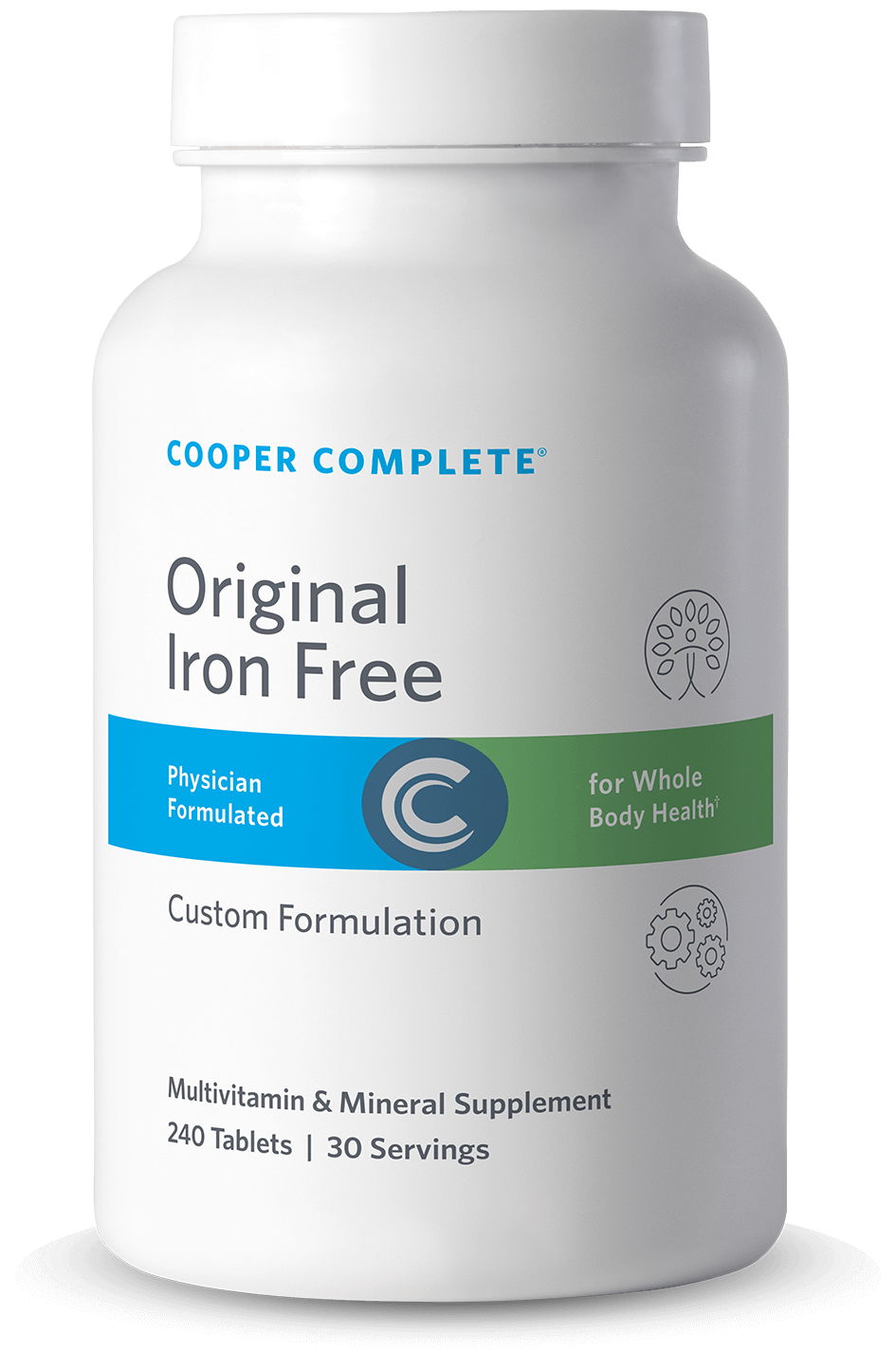
Original Comprehensive Multivitamin Iron Free
Experience the difference - top-rated physician-formulated and recommended multivitamin and mineral supplement packed with 25 key vitamins and minerals, including Zinc, Magnesium, Potassium, Biotin, Selenium, Copper, Vitamins A, C, D, E, K, and activated B vitamins.†
$54.98 Add to cartVitamin K Function in the Body
Vitamin K’s primary function is to regulate blood clotting, a process that begins when an injury tears a blood vessel. The body uses K to synthesize the protein that controls clotting.
A severe lack of K can lead to improper blood clotting and blood loss – including frequent nose bleeds.
K reduces the risk of bleeding stemming from liver disease and long-term use of aspirin or antibiotics. Additionally, supplementation helps when gastrointestinal problems like colitis, sprue, cystic fibrosis or Crohn’s disease have reduced vitamin absorption.
When someone is deficient in K, it may be because of a physical condition that has prevented synthesis or absorption. Reasons include anticoagulant therapy or high antibiotic dosages that have killed intestinal bacteria.
People with liver disorders and alcoholics tend to lack enough K.
Researchers have found that vitamin K impacts bone repair. Their work suggests K supplements reduce the risk of fractures, particularly in postmenopausal women. Higher levels correspond to greater bone density.
Blood Thinners and Pregnancy
Vitamin K is a major issue for individuals on Warfarin (blood thinners), with its role in blood clotting. Generally, increases in vitamin K make warfarin less effective. For this reason, the Basic One multivitamin and mineral formulations do not contain vitamin K.
Physicians sometimes recommend that pregnant women and patients prone to bruising take more Vitamin K. However, in the last stages of pregnancy, too much K can be toxic to a developing baby.
And adults who have consumed an excess of Vitamin K can suffer from thickened blood, coronary heart disease, other artery problems, and brain stroke.
Three Forms of Vitamin K
There are three forms for dietary consumption:
- K1 or phylloquinone, which occurs in green, leafy vegetables like lettuce, broccoli and spinach and in olive oil.
- K2 or menaquinone, is contained in raw eggs, fermented soybeans, and many kinds of cheese and liver.
- K3 or menadione is a synthetic form seldom used in human vitamin supplements in Western countries but is sometimes included in pet food and livestock feed.
K1 accounts for about 90 percent of vitamin K consumed in a typical Western diet.
K2 is beneficial to the body but is far more expensive than K1 in supplement form. K2 comprises about 10 percent of K intake in developed nations.
Most Americans get enough or almost enough K in their diet. However, the NIH has not established daily recommendations for dietary intake. Overall, the body stores very little of this vitamin. Small amounts deposit in the liver and bones to meet the need for a few days.
Vitamin K Research
Epidemiological studies suggest an association between decreased intake and increased risk of hip fracture but not decreased bone density. Particularly, some studies found a link between low intakes and decreased bone density in women in some studies. Furthermore, vitamin K needs more research on its potential impact on bone health.
According to the Linus Pauling Institute at Oregon State:
- liver storage is very low
- the vitamin K cycle may not be fully functional in newborns, especially premature infants
- the vitamin K content of breast milk is low. Infants whose mothers are on anticonvulsant medication to prevent seizures are also at risk for vitamin K deficiency.
- deficiency in newborns may result in a bleeding disorder called vitamin K deficiency bleeding (VKDB) of the newborn
Consult with a physician when choosing a multivitamin based on your body’s specific needs. Cooper Complete Basic One and the Cooper Complete Healthy Body Pack do not contain vitamin K.
Article provided by Cooper Complete team.