How To Compare Omega-3 Supplements

Omega-3 fats are polyunsaturated fatty acids, also known as the “good fat” found in fish and some plants. Since our bodies cannot produce omega-3 fatty acids on their own, we must consume them through food or supplements. There are different types of omega 3 supplements, and seemingly hundreds of brands available on the shelf. So, how should we compare omega-3 supplements?
Types of omega-3 fatty acids
The three main types of omega-3 fatty acids are:
- EPA (eicosapentaenoic acid)
- DHA (docosahexaenoic acid)
- ALA (alpha-linolenic acid)
Advanced Omega-3 Supplement
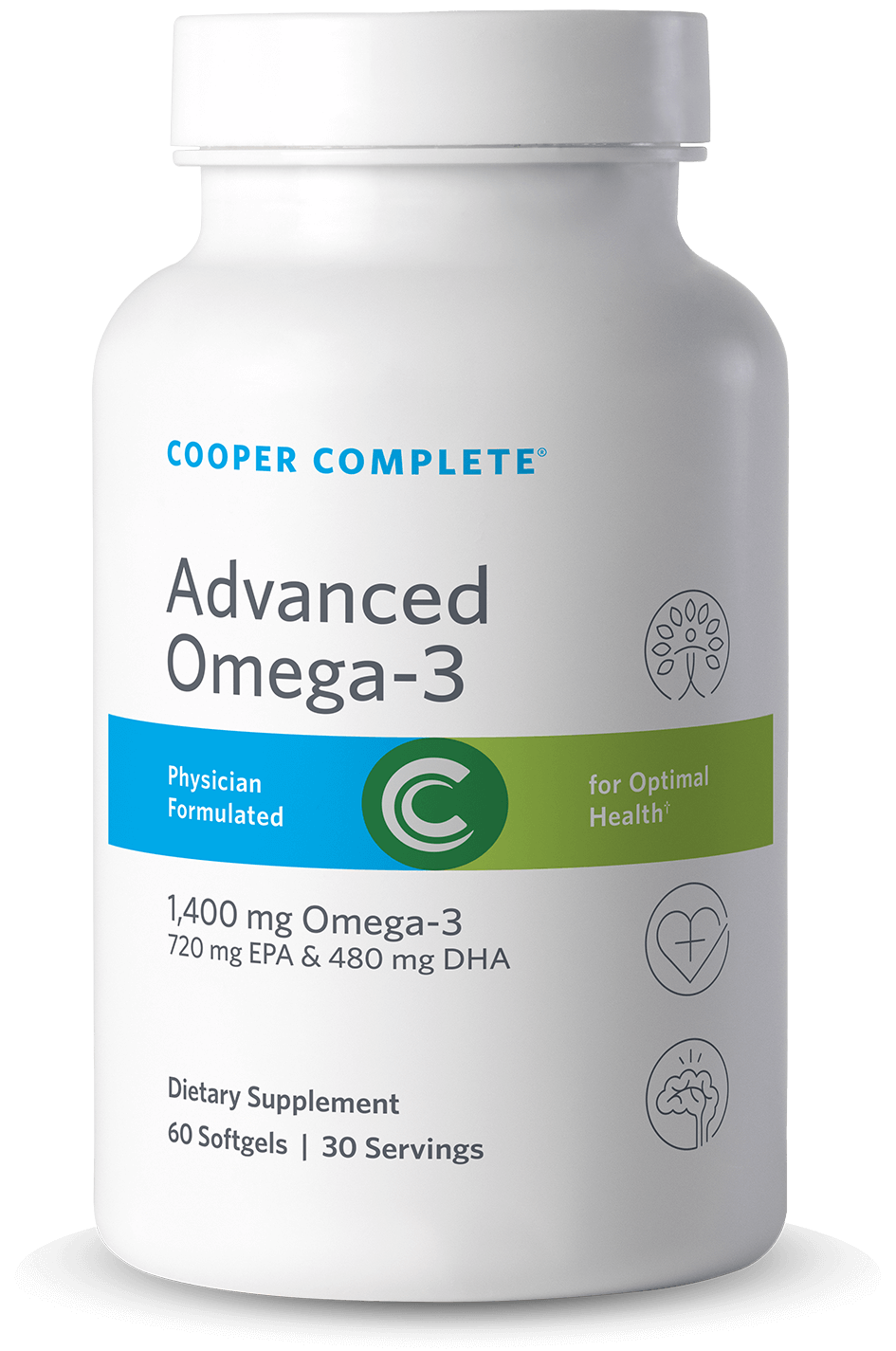
Advanced Omega 3 Supplement contains 720 mg EPA, 480 mg DHA, and 200 mg other omega-3 fatty acids in each serving of two lemon-flavored softgels. Omega 3 supplementation supports heart health, cognition, immune, and inflammatory health without any fishy aftertaste.†
$22.98 Add to cartEicosapentaenoic acid (EPA) and docosahexaenoic acid (DHA) are omega-3 fats found in fatty fish such as salmon, mackerel, herring, lake trout, albacore tuna, sardines and anchovies. Alpha-linolenic acid (ALA) is the omega-3 fat found in plants but mostly seed and nut oils such as canola, flaxseed and walnut.
While salmon is the most popular fatty fish, anchovies, sardines, mackerel, albacore tuna and herring are also sources high in omega-3. A combination of wild-caught anchovy, sardine and mackerel fish oils provide the omega-3 fatty acids in Cooper Complete Advanced Omega-3; however, cod and krill are also commonly used in omega-3 products on the market.
Prioritize EPA and DHA in fatty fish and omega-3 supplements
Studies show humans are relatively inefficient in converting ALA into EPA and DHA. One study reported boosting ALA to more than 10 times the current average intake in the United States caused only small increases in EPA and DHA blood levels. The American Heart Association (AHA) recommends eating fish, particularly fatty fish, at least two times per week. Two to three servings a week of fatty fish (about 8 ounces) leads to an average daily intake of 500 milligrams (mg) of EPA and DHA, which is associated with a lower risk of heart disease.
The AHA also suggests people with documented coronary heart disease consume about 1 g (1,000 mg) of EPA+DHA per day, preferably through fatty fish consumption four to five times a week, if not through supplement form. For patients who need to lower their triglycerides, 2-4 g of EPA+DHA per day is recommended. Other research indicates omega-3 fatty acids provide benefits in relieving symptoms of depression, inflammatory bowel disease and autoimmune diseases such as lupus and rheumatoid arthritis.
Omega 3-6-9 – which are fine?
Omega-3, omega-6 and omega-9 fatty acids are dietary fats; however, they are not created equal and do not have the same effects. Research shows omega-3 fatty acids have anti-inflammatory properties, but omega-6 actually causes inflammation in the body if too much is consumed. Omega-6 is typically found in vegetable oils, soybeans, eggs and fish as well as nuts and seeds. When eaten in moderation and instead of saturated fats in meats and dairy products, this fatty acid can benefit heart health.
The same is true for omega-9 fatty acids. Also referred to as oleic acid, omega-9 is most commonly found in olive, peanut and avocado oil as well as in almonds. Because of the body’s capability of producing omega-6 and 9 on its own, both of these fatty acids are deemed as non-essential. Since a typical balanced healthy diet contains high levels of these fatty acids, omega-6 and 9 are not included in the Cooper Complete Advanced Omega-3 formulation.
Compare Omega-3 supplements by reading supplement facts panels
Grocery, health food stores and discount club shelves are full of more than enough fish oil and omega-3 fatty acid products to overwhelm us. To accurately compare omega-3 products, review the Supplement Facts portion of the label and add up the amounts of EPA and DHA documented to be in each serving. For example, below are the Supplement Facts panels for Cooper Complete Advanced Omega-3 and Nordic Naturals Ultimate Omega-3 products.
Cooper Complete Advanced Omega-3 Supplement Facts
| Supplement Facts | ||
|---|---|---|
| The daily dosage of 2 softgels provides: | ||
| Ingredients | Daily Amount |
% Daily Value** |
| Calories (energy) | 25 | |
| Total Fat | 2.5 g | 3%* |
| Cholesterol | 5 mg | 2% |
| Protein | <1 g | |
| Total Omega-3 Fatty Acids as rTG (re-esterified triglyceride) | 1400 mg | † |
| EPA (Eicosapentaenoic acid) as rTG | 720 mg | † |
| DHA (Docosahexaenoic acid) as rTG | 480 mg | † |
| Additional Omega-3 Fatty Acids as rTG | 200 mg | † |
| **Percent Daily Values are based on a 2000-calorie diet. †Daily Value not established. |
||
Ingredients: Concentrated re-esterified triglyceride (rTG) fish oil (wild ocean-caught anchovy), capsule shell (gelatin, glycerine, purified water), natural lemon flavor, proprietary antioxidant blend (consisting of natural tocopherols (soy), rosemary extract, and ascorbyl palmitate).
A daily serving provides 720 mg EPA + 480 mg DHA = 1200 mg total EPA/DHA.
The suggested retail price is $22.98 for a 30-day supply. The daily cost of 1200 mg EPA/DHA per day is 77 cents. ($22.98 / 30 servings = $0.766)
Nordic Naturals Ultimate Omega-3 (Lemon Soft Gels) Supplement Facts
| Supplement Facts | ||
|---|---|---|
| The daily dosage of 2 softgels provides: | ||
| Ingredients | Daily Amount |
% Daily Value** |
| Calories (energy) | 20 | |
| Calories from Fat | 20 | |
| Total Fat | 2.0 g | 3%* |
| Saturated Fat | 0.1 g | 1% |
| Trans Fat | 0.0 g | † |
| Total Omega-3s | 1280 mg | † |
| EPA | 650 mg | † |
| DHA | 450 mg | † |
| Other Omega-3s | 180 mg | † |
| **Percent Daily Values are based on a 2000-calorie diet. †Daily Value not established. Less than 5 mg of Cholesterol per serving. |
||
Ingredients purified deep sea fish oil (from anchovies and sardines), soft gel capsule (gelatin, glycerin, water, natural lemon flavor), natural lemon flavor, d-alpha tocopherol, rosemary extract (a natural preservative).
A daily serving provides 650 mg EPA + 450 mg DHA = 1,100 mg total EPA/DHA.
The suggested retail price is $27.95 for a 30-day supply (as priced on the competitor’s website 04/10/2023). The daily cost of 1100 mg EPA/DHA per day is 93 cents. ($27.95 / 30 servings = $0.93)
In this comparison of omega-3 supplements, Cooper Complete Advanced Omega-3 contains 9% more EPA and DHA, with a 18% lower cost.
The average American eats seafood approximately once every 11 days. If you fall in this category, try to consciously include at least one serving of fatty fish in your diet weekly. Simple ways to add omega-3 EPA and DHA to your diet include consuming a grilled piece of salmon, eating an albacore tuna sandwich or snacking on sardines in tomato sauce atop saltine crackers.
As a reminder, your health care provider understands your health profile best, including your medical history, risks and current medication and supplement use. It is important to talk to him or her about which supplements are best for you before you begin taking any new supplement. Your doctor may have the ability to check your omega 3 index, omega 3 and omega 6 levels to ensure you are getting adequate healthy fatty acids.