Compare Vitamins and Supplements

The U.S. vitamin and supplement industry is a $35.6 billion business with more than 29,000 supplements on the market from nearly 450 major companies in the U.S. With new products entering the market every year and marketing messages coming from every direction, how do you compare vitamins and supplements to know you’re taking the vitamins and nutritional supplements best for you?
While comparing each Cooper Complete product to everything else available would be a monumental task—and information overload for our valued customers—we share below how three of our most popular products compare to competitors’ best sellers of their types.
Compare Vitamins and Supplements: Multivitamins
Since multivitamins contain so many important nutrients—16-17 in Cooper Complete Basic One Daily Multivitamins—it’s easy to assume they all deliver the same or similar benefits. But, when you look closer, important differences are evident.
Comparing Cooper Complete Basic One to Centrum Adults multivitamins—some of the most popular multivitamins on the market—the story begins with the B vitamins.
Compare Basic One and Centrum Vitamins
|
|||
|---|---|---|---|
| Ingredient | Cooper Complete Basic One | Centrum Adults | Centrum Silver Adults |
| Thiamin-vitamin B1 | 1.5 mg | 1.5 mg | 1.5 mg |
| Riboflavin-vitamin B2 | 2 mg | 1.7 mg | 1.7 mg |
| Niacin-vitamin B3 | 20 mg (as niacinamide) | 20 mg | 20 mg |
| Pantothenic Acid-vitamin B5 | 10 mg | 10 mg | 10 mg |
| Vitamin B6 | 10 mg | 2 mg | 3 mg |
| Biotin-vitamin B7 | 30 mcg | 30 mcg | |
| Folic Acid-vitamin B9 | 333 mcg DFE (200 mcg as Quatrefolic® (6s)-5-methyltetrahydrofolic acid, glucosamine sale) | 667 mcg DFE (400 mcg folic acid) | 667 mcg DFE (400 mcg folic acid) |
| Vitamin B12 | 400 mcg (as methylcobalamin) | 6 mcg | 25 mcg |
Forms of Folic Acid
The folic acid contained in Centrum Adults multivitamin is a synthetic form, while the folate in Cooper Complete Basic One is Metafolin®, the naturally occurring active form of 5-methyltetrahydrofolate (5-MTHF). This form of folate crosses the blood-brain barrier to help the body produce serotonin, norepinephrine and dopamine and doesn’t mask the anemia associated with vitamin B12 deficiencies the way many other forms of folic acid do.
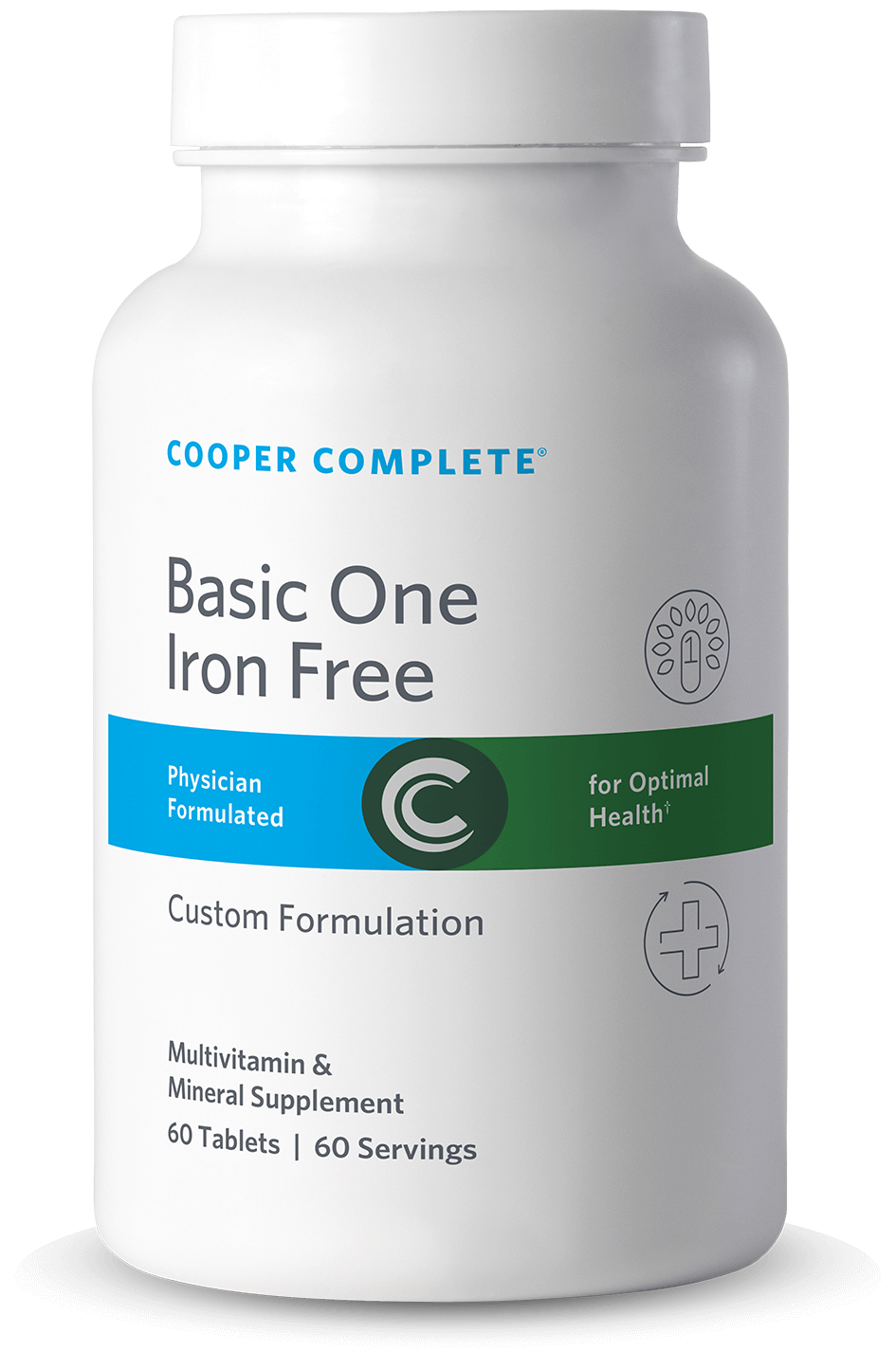
Basic One Daily Multivitamin Iron Free
Basic One daily multivitamin contains methylated (5-MTHF) folate and vitamin B12, 50 mcg (2000 IU) vitamin D3, magnesium, zinc and other premium vitamins and minerals in amounts proven beneficial to optimal health.
$29.98 Add to cartIt is estimated that as many as 60% of U.S. consumers can’t convert folic acid to the active form the body uses. Unlike synthetic forms of folate which require an additional enzyme to aid conversion, the 5-MTHF found in Basic One can be immediately absorbed by the body to deliver its benefits. Read more about the benefits of folate here.
Commercial cereals, bread and other grains have been fortified in the United States since 1998, and the average adult consumes 100 to 200 mcg per day of folic acid from fortified foods. Individuals consuming higher levels of cereals and grains and also taking a multivitamin with 400 mcg of folic acid may go above the 1000 mcg daily tolerable upper intake level (UL). Taking into account the average diet, Basic One contains 200 mcg of folic acid rather than 400 mcg.
Vitamin B12 Absorption
As we age, stomach acid levels decrease, reducing the absorption of nutrients, including B12. The form of B12 found in Cooper Complete Basic One—methylcobalamin—is more absorbable than the synthetic form found in Centrum Adults. Additionally, Basic One contains 400 mcg of vitamin B12, which helps ensures the body has a healthy level of B12, compared to the 6 mcg in Centrum Adults and 25 mcg found in Centrum Silver multivitamins. Vitamin B12 is crucial in cell metabolism throughout the body, DNA production, and healthy nerve function.
Letter Vitamins and Lycopene
In addition to the significant advantages offered by Basic One’s B vitamins, there are several important differences you should be aware of with other multivitamin ingredients.
Compare Letter Vitamins and Lycopene |
|||
|---|---|---|---|
| Ingredient | Cooper Complete Basic One | Centrum Adults | Centrum Silver Adults |
| Vitamin A | 600 mcg (100% as beta-carotene) | 1050 mcg (29% as beta-carotene) | 750 mcg (40% as beta-carotene) |
| Vitamin C | 150 mg | 60 mg | 60 mg |
| Vitamin D3 | 50 mcg (2000 IU) | 25 mcg (1000 IU) | 25 mcg (1000 IU) |
| Vitamin E | 134 mg (as natural d-alpha-tocopheryl succinate) | 13.5 mg | 22.5 mg |
| Vitamin K | 25 mcg | 30 mcg | |
| Lycopene | 5 mg (5000 mcg) | 300 mcg (0.3 mg) | |
Vitamin A
Consuming too much vitamin A may interfere with the ability of vitamin D to work properly. Additionally, according to the Harvard School of Public Health, “it is preferable to choose a multivitamin supplement that has all or the vast majority of its vitamin A in the form of beta-carotene.” While all 600 mcg of Basic One’s vitamin A are non-toxic beta carotene, only 304.5 mcg (29%) of Centrum Adults’ vitamin A comes from beta carotene.
Vitamin C
This essential vitamin supports a healthy immune system and helps lower LDL cholesterol and heart disease risk while aiding iron absorption. The National Institutes of Health tells us adults who take 80-110 mg/day of vitamin C may reduce their risk of cancer.
Vitamin D3
The physicians of Cooper Clinic have established 50 mcg (2000 IU) as the baseline level of vitamin D supplementation. Centrum Adults multivitamins deliver only half this recommended level with each daily serving.
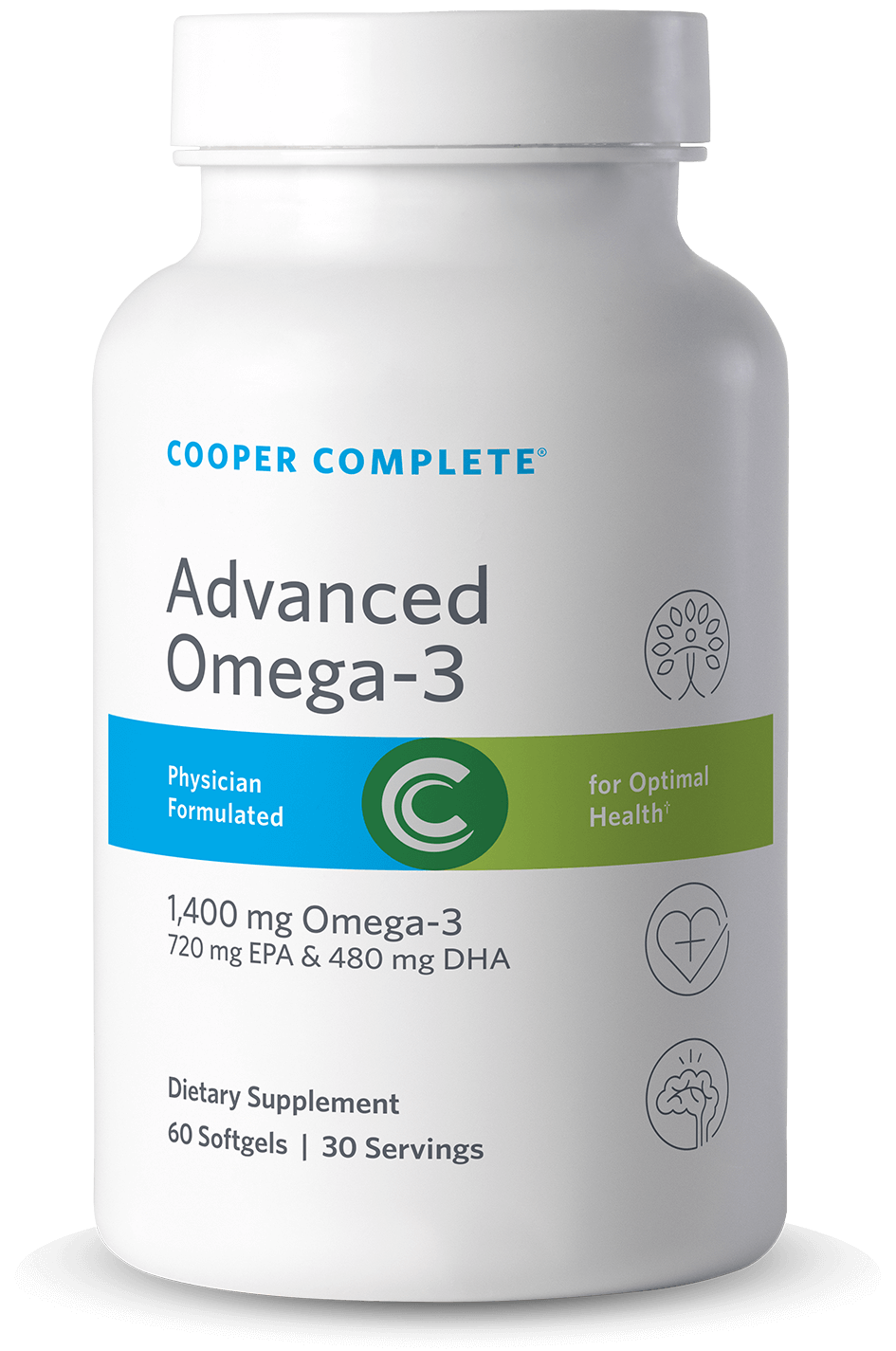
Advanced Omega-3 Supplement
Advanced Omega 3 Supplement contains 720 mg EPA, 480 mg DHA, and 200 mg other omega-3 fatty acids in each serving of two lemon-flavored softgels. Omega 3 supplementation supports heart health, cognition, immune, and inflammatory health without any fishy aftertaste.†
$22.98 Add to cartVitamin E
A study of approximately 90,000 nurses found the incidence of heart disease was 30% to 40% lower in those with the highest intakes of vitamin E, primarily from supplements. Basic One contains more vitamin E than Centrum Adults and is a natural form (D-alpha-tocopheryl succinate), which is absorbed and retained better than the synthetic form.
Vitamin K
To enable individuals on traditional blood thinners to take our multivitamins safely, vitamin K has been intentionally excluded from Cooper Complete Basic One as it plays an important role in blood clotting.
Lycopene
A Finnish study found that men with the highest concentrations of lycopene had a decreased risk of stroke. Basic One contains more than 16 times more lycopene than Centrum Silver Adults.
Compare Vitamins and Supplements: Fish Oil Supplements
The U.S. accounts for almost 78% of the over $5.6 billion global omega-3 supplement market with annual growth predicted at 8.6% through 2028. The Mayo Clinic considers omega-3 fatty acids essential for good health, reducing heart disease risk, lowering blood pressure, triglycerides and cholesterol and providing inflammatory relief for those suffering from rheumatoid arthritis.
American Heart Association (AHA) recommends eating fatty fish, the primary source of omega-3 fats, at least two times per week. Two to three 3-ounce servings of fatty fish a week provide an average daily intake of 500 mg of eicosapentaenoic acid (EPA) and docosahexaenoic acid (DHA), the types of fatty acids associated with a lower risk of heart disease. Cooper Clinic physicians recommend a minimum daily serving of 1000 mg (1 gram) per day of EPA and DHA fatty acids.
As with multivitamins—and any other nutritional supplement for that matter—it’s important to read the product label carefully to identify the meaningful differences in omega-3 supplements. You want to consume adequate levels of EPA and DHA—and not pay too much for them. Below is a comparison of Cooper Complete Advanced Omega-3 and two top-selling brands, Nordic Naturals® Ultimate Omega® and Nature Made® Fish Oil.
Compare Omega-3 Fish Oil Supplements |
|||
|---|---|---|---|
| Ingredient | Cooper Complete Advanced Omega-3 | Nordic Naturals® Ultimate Omega | Nature Made® Fish Oil |
| Total omega-3 fatty acids | 1400 mg | 1280 mg | 600 mg |
| EPA (eicosapentaenoic acid) | 720 mg | 650 mg | 500 mg EPA + DPA combined |
| DPA (docosahexaenoic acid) | 480 mg | 450 mg | ^see above |
| Other omega-3 fatty acids | 200 mg | 180 mg | 100 mg |
While Nature Made Fish Oil is attractively priced—making it a top-selling supplement—it actually costs almost 10% more than Cooper Complete Advanced Omega 3 for the amount of EPA and DHA consumed with each serving. Nordic Natural Ultimate Omega, on the other hand, contains 8% less EPA and DHA at a cost almost 40% higher than Cooper Complete Advanced Omega-3.
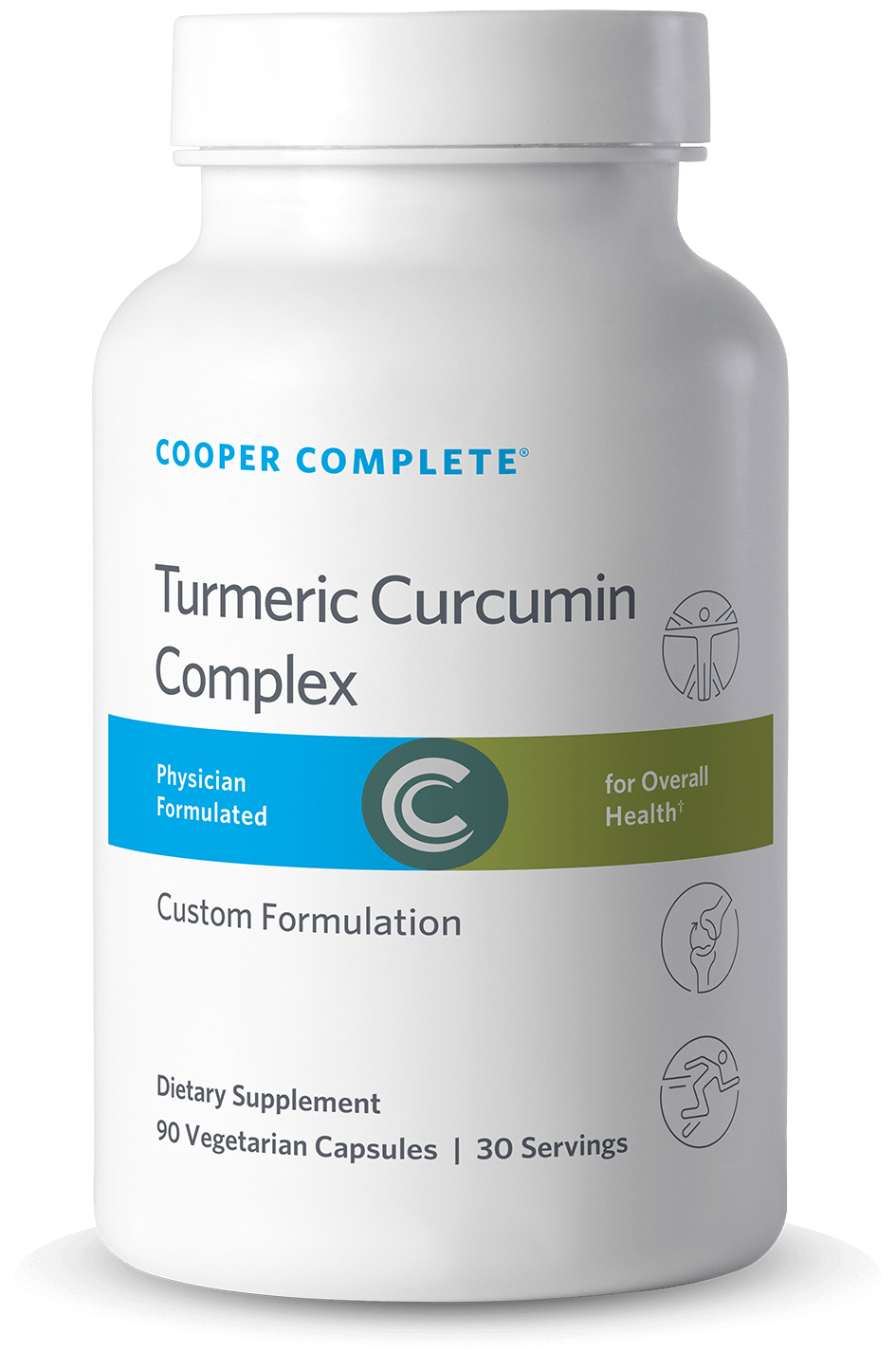
Turmeric Curcumin Supplement
Contains 1000 mg of turmeric extract, which is standardized to contain 95% curcuminoids, and 10 mg of black pepper in 3 vegetarian capsules. Physician formulated to support a healthy inflammatory response.
$35.98 Add to cartFor more information on the benefits of omega-3 fatty acids, read about the health support they deliver throughout the body.
Compare Vitamins and Supplements: Turmeric Supplements
Considered a superstar among natural health practitioners, the anti-inflammatory benefits of the antioxidant turmeric are behind the recent growth of this popular supplement. Fortune Business InsightsTM reports that the turmeric supplement market, valued at $73.4 million globally, will double to more than $155 million by 2029.
Turmeric’s ability to provide relief from inflammation is just the beginning of its benefits story. In addition to its anti-inflammatory benefits for sufferers of rheumatoid arthritis and osteoarthritis, turmeric can help improve skin, heart, brain, and digestive system health.
Additionally, preliminary research indicates turmeric may also reduce insulin resistance and lower blood sugar. And there is growing research on turmeric’s role in protecting the brain from Alzheimer’s disease. Read more to get the details on the whole-body benefits of turmeric.
When it comes to finding the best turmeric supplement for you, read labels carefully to understand the amount of curcuminoids in each recommended serving clearly. Curcuminoids are natural polyphenol compounds derived from turmeric root and are the active ingredients delivering this supplement’s benefits.
Natural turmeric powder contains 150 mg of curcuminoids in each teaspoon (3% of volume). Additionally, turmeric supplements may include turmeric curcuminoid extract standardized to 95% pure curcumin to deliver its optimal benefits.
Compare Turmeric Supplements |
|||
|---|---|---|---|
| Ingredient | Cooper Complete Turmeric Curcumin Complex | Qunol® Extra Strength Turmeric Curcumin Complex | BioSchwartz Premium Ultra Pure Turmeric Curcumin with Bioperine® 1500 mg |
| Turmeric Complex | 1000 mg | 1000 mg | 1350 mg |
| Curcuminoids | 1000 mg 95% standardized |
180-220 mg 18-22% curcuminoids |
191 mg 41 mg turmeric + 150 mg 95% standardized |
| Contains BioPerine® | Yes | No | Yes |
While Qunol® and BioSchwartz® turmeric supplements may appear to contain the highest amounts of curcuminoids based on the volume stated on the label (1500 and 1350 mg, respectively), Cooper Complete Turmeric Curcumin Complex, with 1000 mg at 95% standardized curcuminoids has 400% more than BioSchwartz or 200% more than Qunol.
In addition to its high concentration of curcuminoids, Cooper Complete Turmeric also contains BioPerine. This black pepper extract contains piperine, which improves curcumin absorption by a factor of 20. Not all turmeric supplements contain this helpful ingredient. (Bonus: BioPerine also improves the absorption of CoQ10 and iron supplements.)
Be an Informed Consumer
The best way to evaluate nutritional supplements and ensure you’re taking those most effective for you is to be an informed consumer. Read labels carefully and completely. Do your research. And because your physician is most familiar with your personal health profile, talk to them about which supplements are best for you. Cooper Complete ingredient levels are based on the amounts found to be beneficial in the overall body of scientific research and the amount found in an average healthy diet.