
Triglycerides vs Ethyl Ester for Omega-3 Supplements

We lean on Cooper Clinic physicians who help formulate our products based on evidence and trends they see from the thousands of preventive exams they conduct each year, along with medical research. Combining the evidence and recommendations of Cooper Clinic physicians with recommendations from leading omega-3 researchers, including Bill Harris, PhD, we decided to change to fish oil in the triglyceride form from the previously used ethyl ester form.
Studies Comparing Triglycerides vs Ethyl Ester
The following studies are part of the body of evidence demonstrating the triglyceride form of fish oil (omega-3) is better absorbed than the ethyl ester form.
Study 1
At the prescribed dosage, the statistical ranking of the four products in terms of increase in whole blood omega-3 fatty acid levels was:
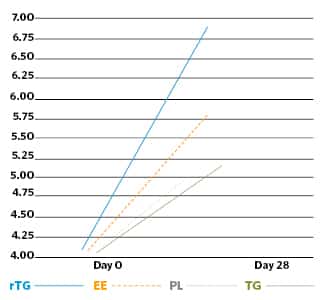
- Concentrated rTG (Triglycerides) fish oil*
- EE fish oil
- Triglyceride TG salmon oil
- PL krill oil
* (The form chosen for Cooper Complete Advanced Omega-3)
Administered as:
- Randomly assigned
- 28-day period
- Followed by a 4-week washout period
- Blood samples taken before and after supplementation were quantified for fatty acid analysis.
Results:
Whole blood EPA percentage increase in subjects consuming concentrated rTG fish oil was more than four times that of krill and salmon oil. Risk reduction in several elements of cardiovascular disease was achieved to a greater extent by the concentrated rTG fish oil than by any other supplement. Krill oil and (unconcentrated) triglyceride oil were relatively unsuccessful in this aspect of the study.
Laidlaw, M., Cockerline, C. A., & Rowe, W. J. (2014). A randomized clinical trial to determine the efficacy of manufacturers’ recommended doses of omega-3 fatty acids from different sources in facilitating cardiovascular disease risk reduction. Lipids in health and disease, 13(1), 99.
Study 2
“The ethyl esters of EPA and DHA have a different absorption rate in the human body than triglyceride forms, but plasma lipid levels appear to be equivalent, however the triglyceride form can be better utilized in the body.”
Walker, R., Decker, E. A., & McClements, D. J. (2015). Development of food-grade nanoemulsions and emulsions for delivery of omega-3 fatty acids: opportunities and obstacles in the food industry. Food & Function, 6(1), 41-54. Advanced Omega 3 Supplement contains 720 mg EPA, 480 mg DHA, and 200 mg other omega-3 fatty acids in each serving of two lemon-flavored softgels. Omega 3 supplementation supports heart health, cognition, immune, and inflammatory health without any fishy aftertaste.†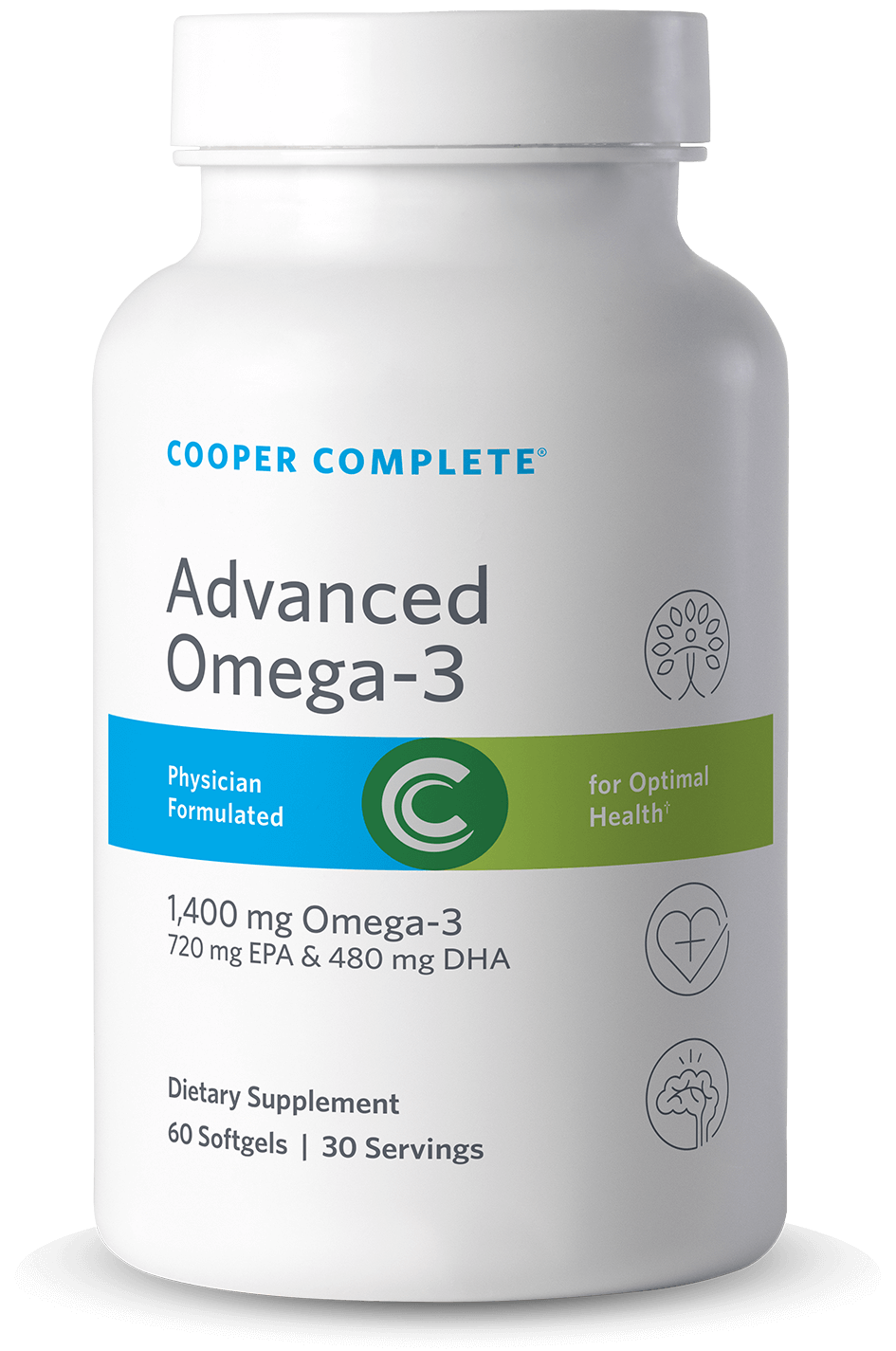
Advanced Omega-3 Supplement
Study 3
“Enhanced increase of omega-3 index in response to long-term n-3 fatty acid supplementation from triacylglycerides versus ethyl esters”
Administered as:
- Double-blinded placebo-controlled trial
- Investigated the response of the Omega-3 Index, the percentage of EPA+DHA in red blood cell membranes, to supplementation with two different omega-3 fatty acid formulations in humans
- 150 volunteers randomly assigned to one of the three groups:
- Fish oil concentrate with EPA+DHA (1.01 g+0.67 g) given as re-esterified triacylglycerides (rTAG group)
- Corn oil (placebo group)
- Fish oil concentrate with EPA+DHA (1.01 g+0.67 g) given as ethyl ester (EE group)
- Volunteers consumed four gelatine-coated soft capsules daily over a period of six months
- Omega-3 Index was determined at baseline, after three months and at the end of the intervention period
Results:
The Omega-3 Index increased significantly in both groups treated with fish oil from baseline to 3 and 6 months (P<0.001); Omega-3 Index increased to a greater extent in the rTAG group than in the EE group: 186 versus 161% (P<0.001) after 3 months, and 197 versus 171% (P<0.01) after 6 months. (Note: The Omega-3 Index is determined in all Cooper Clinic patients.)
Neubronner J, Schuchardt JP, Kressel G, Merkel M, von Schacky C, Hahn A. Enhanced increase of omega-3 index in response to long-term n-3 fatty acid supplementation from triacylglycerides versus ethyl esters. J Clin Nutr. 2011;65(2):247-54.
Using EPA + DHA to raise omega-3 index
Knowing an individual’s Omega-3 Index is the only way to truly determine what level of supplementation is sufficient. OmegaQuant®, founded by the previously mentioned Bill Harris, PhD, is a lab that specializes in Omega-3 Index testing. The lab’s research has led to the following advice for increasing an individual’s Omega-3 Index:
“If your Omega-3 Index is between 4 percent and 8 percent, OmegaQuant would recommend you increase your current EPA+DHA intake by 0.5 -1 gram (500-1,000 mg) per day. This can be accomplished in two ways: eating more oily fish and/or taking fish oil supplements. On the other hand, if it is less than 4 percent, our recommendation is to raise your intake by 1-3 g (1,000 -3,000 mg) per day. Although this can be accomplished by eating more oily fish, fish oil supplements are usually necessary to achieve this level of EPA+DHA intake.”
Raising your Omega-3 Index is achieved by consistently consuming the recommended level of omega-3 over time. The triglyceride form in our Advanced Omega-3 provides our customers with the ideal form for optimal absorption in comparison to ethyl ester.